You Own Everything and Still Feel Behind: The Collector's Curse of the 'Complete' Set
There's a particular kind of dread that hits when you pull a pristine omnibus off your shelf and realize the publisher just announced a 'definitive' anniversary edition with forty pages of new content. Owning the complete collection somehow made you feel less complete. Welcome to the paradox that's quietly consuming modern fandom.
It shouldn't make sense. You did the thing. You tracked down every volume, filled every gap, maybe even hunted a variant cover across three different comic shops in your city. The set is done. And yet, somehow, the moment you close the final page, the clock quietly resets.
The Finish Line That Keeps Moving
Completionism used to be a reasonable goal. You bought the box set, you owned the story, you were done. But somewhere along the way — and publishers absolutely know what they're doing here — the definition of 'complete' became a living, breathing target that shifts just fast enough to keep you perpetually reaching.
Think about how many times a beloved comic run or film franchise has been repackaged in the last decade alone. The standard collection becomes the 'deluxe' edition. The deluxe edition gets an 'oversized artist's edition.' Then comes the anniversary hardcover with a foreword from someone who wasn't involved in the original project. Then the director's cut with scenes that were 'never meant to be seen' — until now, conveniently, at $79.99.
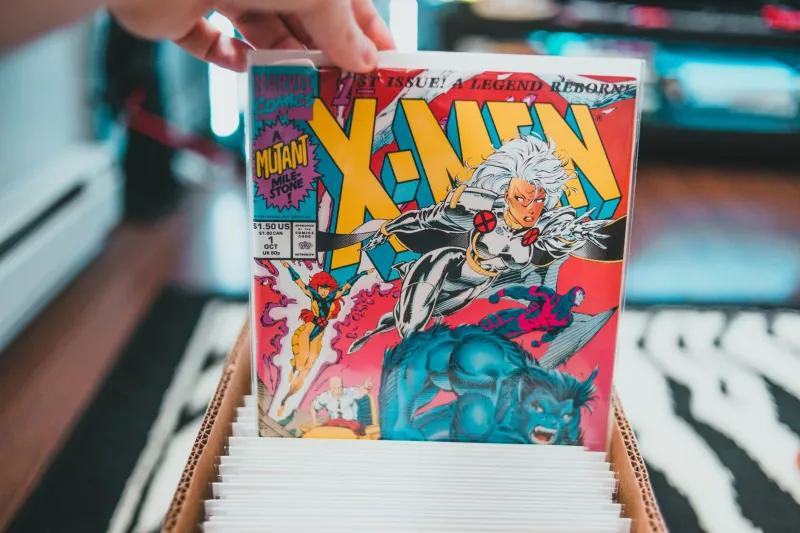
Marvel and DC have practically turned this into a sport. A collected edition of a classic X-Men run might exist in four or five different formats simultaneously, each promising something the last one didn't quite deliver. Criterion Collection has built an entire prestige brand around the idea that no film is ever truly finished being presented. And honestly? It works. Because fans want to believe there's always a more authentic, more complete version waiting just around the corner.
FOMO With a Spine and a Barcode
What publishers figured out — and what fan communities quietly reinforce — is that the fear of missing out doesn't stop at digital content or live events. It translates perfectly to physical media. In fact, it might hit harder with collectibles, because the absence is tangible. You can see the gap on your shelf.
Social media accelerated this in ways that feel almost cruel in retrospect. Collector communities on Reddit, Instagram, and TikTok are genuinely wonderful spaces — we'd be the last ones here at OmnibusSoc to say otherwise — but they also function as a constant, ambient reminder of every edition you don't own. Someone posts their gallery of variant spines. Someone else shares an unboxing of the limited slipcase you passed on. The algorithm serves it right to you, and suddenly your 'complete' collection feels like a rough draft.
This isn't an accident. Publishers monitor these communities. They understand that visibility of new editions within passionate collector spaces drives sales more reliably than traditional advertising. Your fellow fans, posting in good faith, become an inadvertent marketing engine.
Why We Fall For It Every Time
Here's the uncomfortable truth: we fall for it because the emotional logic is completely sound, even when the financial logic is not.
Collecting, at its core, is about connection — to a story, a creator, a moment in your life when something hit you in exactly the right way. When a publisher releases a new edition of something you love, they're not just selling paper and ink. They're selling the promise of a deeper connection to that thing. More context. More access. More of the feeling that made you care in the first place.
That's genuinely hard to resist, and it's worth being honest about rather than pretending collectors are simply being irrational. The desire is real. The connection is real. The exploitation of that desire is also, unfortunately, very real.
Psychologists who study collecting behavior have noted that completionism often functions less as a goal and more as a process — the hunt itself provides the satisfaction, which means the finish line needs to keep moving for the hobby to remain emotionally rewarding. Publishers didn't invent this quirk of human psychology, but they've gotten extraordinarily good at designing release strategies around it.
The Community Reframe
So what do you do with this? Swear off collecting entirely? Probably not realistic, and also kind of beside the point.
What's more useful is something a lot of collector communities are starting to talk about openly: redefining what 'complete' means on your own terms. Not the publisher's terms. Not the algorithm's terms. Yours.
Some collectors deliberately set a rule — first edition only, or a specific format, or a budget cap per series — and treat that boundary as part of the collection's identity rather than a limitation. Others lean into the curation angle entirely, building collections that reflect a specific era, a creative team, or a personal canon rather than chasing an official 'everything.' That's actually a more interesting shelf, and a more interesting conversation.
The collectors we find most inspiring in this community aren't necessarily the ones with the most exhaustive sets. They're the ones who can tell you why they own what they own — what each volume means to them, what story it tells about their relationship with the source material. That's the kind of completeness that no anniversary edition can threaten.
Owning the Feeling, Not the Gap
The omnibus paradox isn't going away. Publishers will keep finding new ways to frame 'complete,' and fan communities will keep surfacing beautiful editions that make you question your shelves at midnight. That's just the landscape now.
But there's a version of collecting that sidesteps the anxiety without abandoning the joy — and it starts with recognizing that the gap you're actually afraid of isn't on your bookshelf. It's the worry that your connection to the thing you love isn't deep enough, isn't official enough, isn't enough enough.
It is. It always was. The story you fell for didn't need forty pages of bonus material to be worth falling for. And your collection, whatever shape it's in right now, is already telling a story — your story, which is the one that actually matters.
That's worth remembering the next time a 'definitive edition' lands in your inbox.