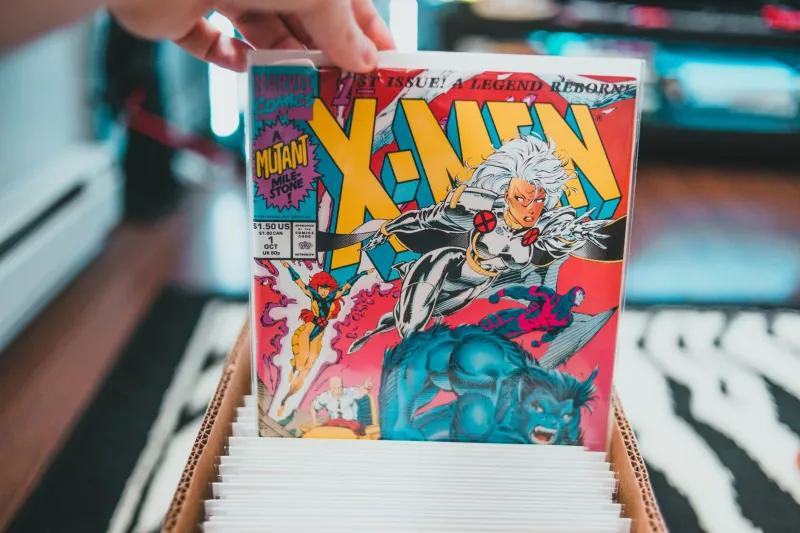
Bundled Into a Corner: How the Franchise Collection Model Is Squeezing Out the Stories You Actually Want

There's a particular kind of frustration that hits when you walk into a comic shop or scroll through an online retailer looking for one specific story — just one — and discover it's only available as part of a massive, spine-breaking, wallet-emptying omnibus. You wanted the appetizer. The publisher handed you the whole buffet.
This is the reality of collecting in 2024, and it's reshaping not just what ends up on your shelf, but what gets greenlit in the first place.
The Bundle Economy Is Real, and It's Growing
Over the past decade, major publishers — Marvel, DC, Dark Horse, and even mid-sized houses in prose fiction — have leaned hard into franchise-first publishing strategies. The logic isn't complicated: a reader who commits to a universe buys more books. An omnibus collector who's already invested in volumes one through five is far more likely to pick up volume six than a casual browser who wandered in off the street.
From a pure revenue standpoint, it works. Complete collection sets move units. Fans who identify as collectors are, almost by definition, completion-driven. Publishers know this, and they've built entire release strategies around it.
But here's where things get complicated for the average reader who just wants a good story without signing a loyalty oath to an entire fictional universe.
"There used to be a real market for the self-contained graphic novel," says one longtime retailer based out of Portland who asked to remain anonymous. "Stuff that had a beginning, middle, and end. Now everything has to be the first chapter of something bigger. Publishers are terrified of anything that doesn't have sequel potential."
When 'More' Stops Meaning 'Better'
For collectors who love omnibus culture — and at OmnibusSoc, that's obviously a lot of us — the sheer volume of bundled content available right now can feel like a golden age. Hardcover editions, slipcase sets, deluxe reprints with bonus material: there's never been more to own.
But there's a quieter conversation happening underneath all that abundance, and it's about what's missing.
Standalone stories — narratives that don't anchor themselves to a larger franchise — are increasingly rare in mainstream publishing. The economic pressure to build universes rather than tell singular tales has pushed a lot of genuinely interesting creative work to the margins. Indies and small press publishers still champion the one-and-done story, but their shelf space (literal and digital) continues to shrink compared to franchise juggernauts.
Author and comics writer Dani Morales, whose work has appeared in several anthology collections, puts it bluntly: "If your pitch doesn't come with a roadmap for at least three follow-up volumes, a lot of editors aren't even listening. That's just where the industry is right now."
For readers, this creates a kind of forced commitment. You can't just dip your toe in. You either wade into the deep end of a franchise or you stay on the shore.
The Collector's Dilemma
Here's the tension that fans in collector communities talk about constantly: the omnibus format is genuinely wonderful for content you already love. Getting a beautifully bound, comprehensive collection of a series you're obsessed with? That's the dream. That's why this whole community exists.
But the same model that makes complete collections so satisfying also creates a barrier to entry that can feel less like an invitation and more like a toll booth.
Consider the reader who hears buzz about a specific storyline — say, a critically acclaimed arc from a long-running superhero series. In an older publishing model, that arc might have been available as a slim trade paperback, priced accessibly, easy to grab and read without prerequisite homework. Today, it might exist only as part of a larger omnibus that assumes you've already read the preceding volumes, or it might be bundled with adjacent storylines you have zero interest in.
"I've definitely bought omnibuses just to get to the one story I actually wanted," admits Marcus T., a collector from Chicago who's been active in online fan communities for years. "And then I feel guilty if I don't read the whole thing. It's like being forced to buy the whole album when you just wanted the single."
That's not a niche complaint. It echoes across collector forums, Reddit threads, and Discord servers with remarkable consistency.
Publisher Perspective: It's Not All Cynicism
To be fair to the publishers, the franchise model didn't emerge purely from greed. There are genuine creative arguments for interconnected storytelling. Shared universes allow for narrative depth and character development that truly standalone stories can't match. And when a franchise works — when readers are genuinely invested in a world across multiple volumes — the experience of reading a comprehensive omnibus collection can be extraordinary.
Publishers also argue, with some legitimacy, that the market shapes the model. Readers vote with their wallets, and for years, franchise content has outsold standalone work at the mass market level. If readers are choosing universes over individual stories, publishers are going to keep building universes.
"We'd love to publish more standalone work," one acquisitions editor at a major comics publisher said, speaking off the record. "But we also have to keep the lights on. The math doesn't always work out in favor of the self-contained story, even when it's brilliant."
What This Means for Your Shelf (And Your Budget)
For collectors navigating this landscape, the practical implications are significant. Building a collection increasingly means building a franchise relationship — financial, temporal, and spatial. Omnibus volumes are large. They're expensive. They require shelf space, storage considerations, and ongoing financial commitment as new entries release.
For fans who love the format, that's a feature, not a bug. But for readers who want to engage with stories on their own terms, the current publishing environment can feel exclusionary in ways that aren't always acknowledged in mainstream conversations about collecting.
The good news? There's genuine pushback happening. Independent publishers, crowdfunded comics projects, and literary fiction houses are actively championing standalone narratives. Platforms like Kickstarter have allowed creators to sidestep franchise pressure entirely and fund self-contained stories directly through fan support.
And within collector communities themselves, there's a growing appreciation for curated personal collections that mix franchise omnibuses with standalone gems — shelves that tell a story about the collector's taste rather than just their completionist loyalty to a brand.
The Story Behind the Collection
At the end of the day, this is a conversation about what we value in storytelling and how the economics of publishing either support or undermine those values. The omnibus format isn't the villain here — it's a genuinely great way to experience content you love in a comprehensive, beautifully produced package.
But the franchise model that increasingly drives publishing decisions? That deserves scrutiny. When standalone stories become economically unviable, readers lose something real: the ability to encounter a complete, self-contained narrative without signing up for a multi-volume commitment.
Your bookshelf is a reflection of the stories that matter to you. The question worth asking is whether the publishing industry is giving you enough options to fill it on your own terms — or whether they're quietly making that decision for you.
We'd love to hear where you land on this. Drop your thoughts in the comments, and let us know: are you all-in on franchise collecting, or are you hunting for those rare standalone gems? Every collection has a story worth telling — even the ones built in defiance of the bundle.