Big Books, Bigger Sales: How the Rise of Complete Comic Collections Is Changing What Gets Published
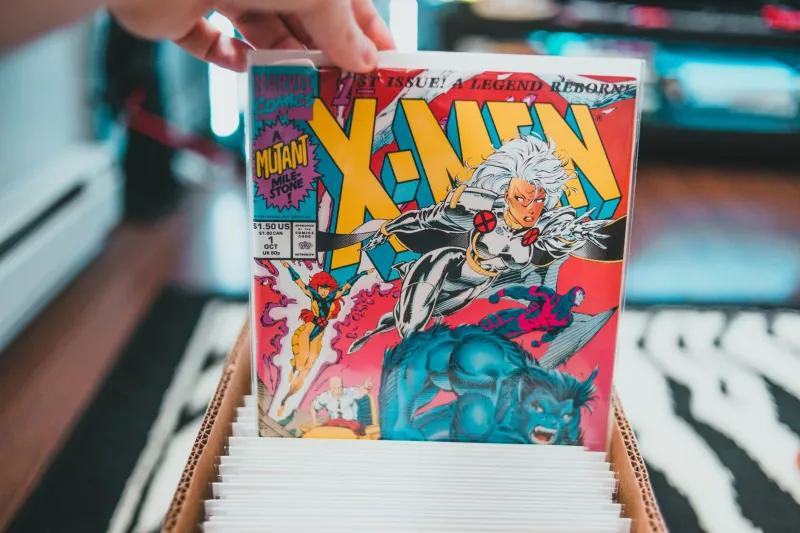
Walk into any comic shop in America right now and you'll notice something. The single-issue racks are still there, still spinning, still stocked with new releases every Wednesday. But the shelf that seems to stop people cold — the one where folks pull out their phones to check prices, flip through pages, and eventually carry something to the register like they just found buried treasure — is the collected editions wall. Specifically, the big ones. The thick, spine-cracking, coffee-table-worthy omnibus volumes that bundle entire runs into a single definitive object.
This isn't just a vibe. Publishers are seeing it in the numbers, and the industry is quietly reorganizing itself around what readers are actually buying.
The Format Shift Nobody Officially Announced
For most of comics history, the single issue was the atom of the medium. You bought your 22-page pamphlet, you waited a month, you bought the next one. Trade paperbacks emerged in the '80s and '90s as a way to collect story arcs, and for a while that felt like the logical endpoint — six issues in one convenient book. Done.
But something shifted in the last decade, and it accelerated hard during and after the pandemic. Readers started gravitating toward comprehensive editions. Not just an arc. Not just a run. Everything. The complete Frank Miller Daredevil. Every issue of Saga in one volume. The entire Hickman X-Men saga packaged as a single object you could actually comprehend without a reading-order spreadsheet.
Marvel, DC, Fantagraphics, Drawn & Quarterly, Dark Horse — they've all expanded their oversized and omnibus lines significantly. Marvel's Omnibus program, which packages hardcover complete runs at premium price points (often $100 or more), has developed its own devoted collector community that tracks solicitations the way sneakerheads track drop dates.
Why Readers Are Reaching for the Big Book
There are a few things happening at once here, and it's worth separating them out.
The streaming brain. Modern audiences have been trained by Netflix and HBO to consume stories in complete chunks. Waiting a month between issues — or even hunting down six individual trades to read a full run — feels increasingly out of step with how people actually want to experience narrative. An omnibus is the comics equivalent of a full season dropping at once. You buy it, you sit down, you read.
The collector instinct. There's also something deeply satisfying about owning the definitive version of something you love. A complete omnibus carries a different psychological weight than a stack of individual trades. It's a statement piece. It signals commitment to a story. In collector culture, completeness has always carried premium value — and publishers have gotten very good at tapping into that feeling.
The discovery factor. For readers who came to comics late, or who want to explore a classic run they missed the first time around, omnibus editions remove the friction of hunting down out-of-print issues or mismatched trade editions. One purchase, one object, whole story. That accessibility matters enormously for growing readership.
The Publisher Calculus
Here's where it gets complicated — and honestly, a little political in the way publishing always is.
Omnibus editions aren't cheap to produce. The paper stock, the binding, the reproduction quality required to make a 700-page hardcover look good — it adds up. Publishers have to believe a collection will sell through before committing to the print run. That means the stories that get the omnibus treatment tend to be the ones with proven fan bases, strong IP recognition, or critical cachet that makes them a safe bet.
The flip side? Plenty of beloved but lower-profile runs never get this treatment. Mid-tier superhero titles from the '90s, indie series that had passionate-but-small audiences, international works that never broke through to mainstream US distribution — these stories exist in a kind of limbo. Single issues are hard to find. Trades may be out of print. Without an omnibus, they slowly become inaccessible.
So while the omnibus boom is genuinely exciting for fans of major runs, it also has a preservation problem baked into it. The market decides what gets remembered.
The Secondary Market Signal
One of the clearest indicators of the omnibus effect isn't at the publisher level — it's on eBay and in the resale market. Certain Marvel and DC omnibus editions have become genuinely scarce after going out of print, commanding two or three times their original retail price. That scarcity drives demand for reprints, which publishers have started doing more frequently in response to fan campaigns and petition drives.
This feedback loop is fascinating. Collectors organize online, track which editions are going out of print, campaign loudly for reprints, and sometimes actually get them. The Absolute and Omnibus collector communities on Reddit and Discord are surprisingly organized — they share solicitation news, grade print quality across different pressings, and debate whether a new printing's paper stock matches the original. It's a whole subculture, and it's growing.
Does Format Shape What We Value?
There's a philosophical question lurking underneath all of this that's worth sitting with: does the presentation of a story change how we value it?
A lot of readers say yes. There's something about holding a beautifully produced omnibus — the weight of it, the quality of the reproduction, the sense that someone decided this run was worth preserving properly — that changes the reading experience. It signals that the work matters. That it deserves to be taken seriously.
On the other hand, some longtime comics readers push back on this. The single issue, they argue, was always the authentic format — the intended reading experience, with letters columns and ads and the specific texture of that month's paper. An omnibus is a repackaging, sometimes a sanitizing. You're not reading the comic; you're reading a museum exhibit of the comic.
Both of those things can be true simultaneously, which is what makes this format shift so interesting to watch.
What Comes Next
Publishers aren't done experimenting. Digital omnibus bundles on platforms like Comixology have made complete runs even more accessible (if less tactilely satisfying). Some publishers are exploring print-on-demand models that could theoretically make any run available in collected form without requiring a traditional print run calculation.
But for right now, in 2024, the big physical omnibus is having a genuine cultural moment. It's the format that says: this story is worth owning completely, worth returning to, worth putting on a shelf where people can see it.
For a community built around the idea that every collection has a story worth telling, that feels like exactly the right conversation to be having.