Curate Your Canon: How Superfans Are Building Personal Omnibus Collections That Rival the Pros
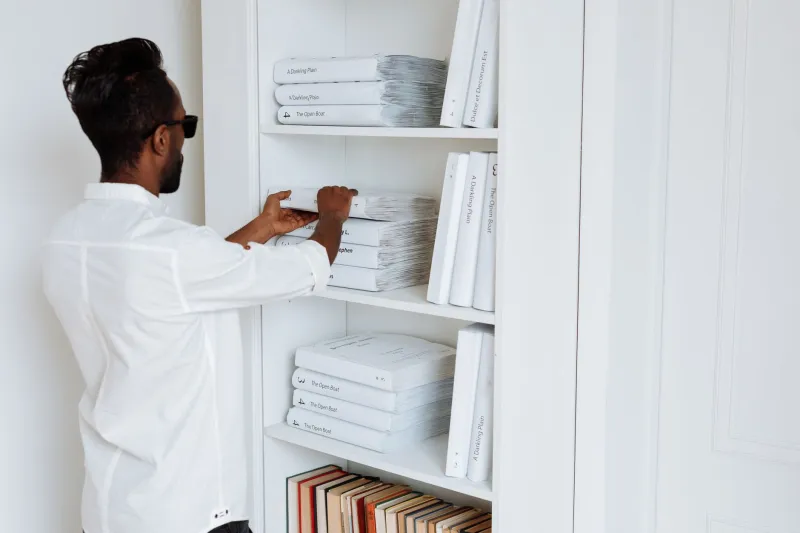
There's something deeply satisfying about cracking open a thick, beautifully bound omnibus edition—everything you love about a story universe packed into one definitive volume. But what happens when the collection you're dreaming of simply doesn't exist yet? For a passionate and rapidly growing community of fans across the country, the answer is simple: build it yourself.
From meticulously organized Notion databases to custom-labeled Blu-ray binders to curated Plex libraries that would make a film archivist weep with joy, everyday readers and viewers are channeling their inner editors. And the results? Honestly, sometimes better than anything a major publisher would put out.
Why "Official" Isn't Always Enough
Let's be real—publishers and studios don't always get it right when it comes to packaging stories. Maybe your favorite fantasy series has three books published by two different imprints, and nobody's bothered to release a unified set. Maybe a beloved TV show exists across two streaming platforms and a DVD release that's long out of print. Or maybe you're a comics fan who wants to read a character's entire history in chronological order, not the patchwork reading guides that seem designed to confuse more than help.
That frustration is exactly what pushed Marcus T., a 34-year-old librarian from Columbus, Ohio, to start building his own omnibus collections about five years ago. "I wanted to read everything related to a specific sci-fi universe in the order the story actually happened, not the order it was published," he told us. "No publisher had done that. So I just... did it myself."
Marcus now maintains a color-coded spreadsheet tracking over 200 titles across novels, short story anthologies, and tie-in comics—all organized into what he calls his "canon stack."
The Collector's Philosophy: It's Not Hoarding, It's Curation
There's an important distinction that serious collectors are quick to make: this isn't about accumulating stuff for its own sake. It's about intentional assembly. Every item in a personal omnibus collection should serve the larger narrative experience.
Jenna R., a graphic designer based in Austin, Texas, has built what she describes as a "multimedia omnibus" around a single long-running fantasy property. Her collection includes the novels, a fan-translated version of a related manga, a folder of official concept art books, and a custom playlist of the composer's soundtrack work. "When I sit down to revisit this world, I want total immersion," she explained. "I want the physical books, the art, the music. I want it to feel like a whole experience, not just rereading a series."
Jenna's approach reflects something a lot of collectors talk about: the idea that a truly great omnibus isn't just a sequence of content—it's a designed experience.
Digital vs. Physical: The Great Collector Debate
One of the most lively conversations inside fan collector communities (and trust us, we've spent time in those Discord servers) is the question of format. Physical or digital? The answer, for most serious curators, is: both, for different reasons.
Physical collections carry emotional weight. There's something undeniably powerful about a shelf full of matched hardcovers, or a custom slipcase you designed yourself and had printed at a local shop. Collectors who lean physical often talk about their shelves as a kind of autobiography—a record of what mattered to them at different points in their lives.
Digital collections, on the other hand, offer flexibility and searchability that physical formats simply can't match. Tools like Calibre for ebooks, Plex or Jellyfin for video, and Komga for comics have made it easier than ever to build organized, beautifully presented digital libraries. Add in custom cover art sourced from fan communities, and a digital omnibus can look just as polished as anything on a Barnes & Noble shelf.
Derek S., a software developer in Seattle who runs a popular Discord server dedicated to omnibus collecting, has gone fully digital. "I've got tagged metadata, custom reading order guides embedded in each collection, and linked companion content," he said. "It took time to set up, but now the experience is seamless. I can hand someone a tablet and say, 'here's the definitive way to experience this story,' and they're set."
Tips for Building Your First Personal Omnibus
Ready to start your own collection? Here's what the veterans recommend:
Start with a single story universe you know well. Don't try to organize everything at once. Pick one series, one fictional world, one creator's body of work—and build from there. Depth beats breadth when you're just getting started.
Define your reading or viewing order before you buy anything. Decide whether you're going publication order, chronological story order, or something else entirely. Write it down. This becomes your collection's spine.
Don't overlook companion content. Art books, making-of documentaries, author interviews, soundtrack releases, and official tie-in merchandise can all deepen an omnibus experience. Think beyond just the "main" text.
Use community resources. Sites like Reddit's various fandom communities, fan wikis, and dedicated Discord servers are gold mines for reading order guides and recommendations. You don't have to figure it all out alone.
Invest in organization tools. Whether it's a spreadsheet, a Notion template, or a dedicated app like Goodreads or Letterboxd, having a system keeps your collection intentional rather than chaotic.
Make it yours. Custom labels, hand-annotated indexes, themed shelving arrangements—the best personal omnibus collections have personality. Don't be afraid to add your own editorial touch.
More Than a Hobby: A New Kind of Storytelling
What's happening in these collector communities is bigger than a niche pastime. It reflects something genuinely interesting about how we relate to stories in the age of infinite content. When everything is available all the time, the act of choosing—of saying "this is what matters, this is the order, this is the complete experience"—becomes its own creative act.
In a way, personal omnibus collectors are functioning as editors, archivists, and storytellers all at once. They're not just consuming narratives; they're actively shaping how those narratives are experienced, both for themselves and for the friends and communities they share their collections with.
Marcus put it best when we asked him what keeps him going after five years of meticulous cataloging. "Every collection tells a story about the person who built it," he said. "Mine tells you exactly what kind of reader I am. That feels meaningful to me."
And honestly? That's exactly the kind of energy we're here for at OmnibusSoc. Every collection has a story worth telling—including the one you're about to build.